Beautiful Watercolor Bride Clipart: A Practical Guide for Designers and Crafters
For designers, scrapbookers, and digital artists, selecting the right visual assets is often the most critical step in defining a project's tone. When working on wedding-related materials, the choice between vector graphics, photographic elements, and hand-painted illustrations significantly impacts the final aesthetic. Beautiful Watercolor Bride Clipart represents a specific niche within this market, offering a soft, romantic texture that differs markedly from rigid line art or hyper-realistic photography. Understanding the technical specifications and artistic implications of this format helps creators decide if it aligns with their specific project requirements.
Defining the Aesthetic and Technical Specifications
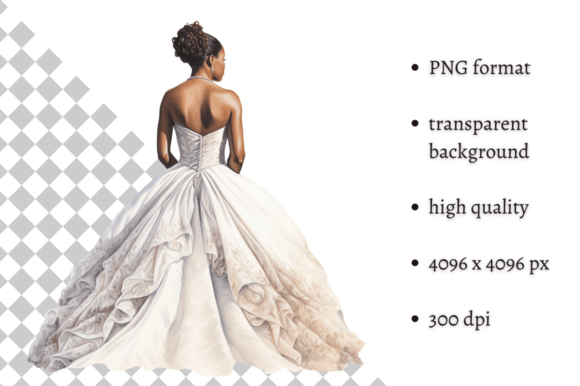
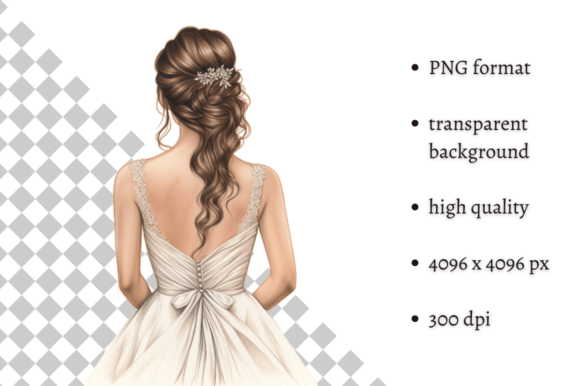
The term "watercolor" in digital design refers to an illustration style that mimics the fluidity, transparency, and pigment blending of traditional water-based paints. Unlike solid-color vectors, which rely on mathematical curves and uniform fills, watercolor clipart captures the organic imperfections of brushstrokes. The Beautiful Watercolor Bride Clipart typically features soft edges, subtle color gradients, and a dreamy quality that evokes emotion rather than strict definition.
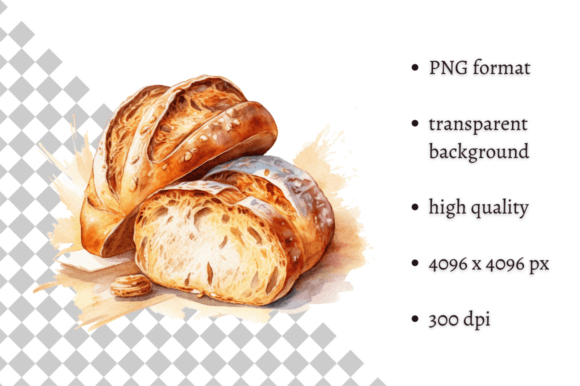
From a technical standpoint, the utility of this asset depends heavily on its resolution and file format. High-quality versions, such as those offered at 300 dpi with dimensions of 4096 x 4096 pixels, are essential for professional output. This resolution ensures that when the image is printed on large-format items like wedding invitations or banners, the details remain crisp without pixelation. Furthermore, the inclusion of a transparent background (usually in PNG format) allows the subject to be layered seamlessly over various textures, patterns, or photographs without the distraction of a white box surrounding the figure.
Comparing Watercolor Styles with Vector and Photographic Alternatives
When evaluating resources for bridal projects, creators often weigh three primary categories: vector line art, stock photography, and painted clipart like the Beautiful Watercolor Bride Clipart. Each serves a distinct purpose and carries different tradeoffs regarding flexibility and mood.
- Vector Line Art: Vectors are infinitely scalable and ideal for logos, monograms, or designs requiring clean, sharp lines. However, they can sometimes feel too sterile or corporate for intimate events like weddings. They lack the textural depth that watercolor provides.
- Stock Photography: Real photos offer authenticity but can be difficult to integrate into mixed-media layouts. Lighting mismatches between a photo and a background pattern are common issues. Additionally, licensing for commercial use can be more restrictive and expensive compared to individual clipart purchases.
- Watercolor Illustrations: This style bridges the gap between the rigidity of vectors and the complexity of photos. It offers the scalability of digital files while retaining an artistic, human touch. The Beautiful Watercolor Bride Clipart fits best here, providing a cohesive look for projects that prioritize elegance and softness over geometric precision.
Evaluating Suitability for Specific Project Types
The decision to use watercolor bride imagery should be driven by the intended application. While versatile, this style is not universally applicable to every design scenario. Analyzing the strengths and limitations helps determine the best fit.
Ideal Use Cases
This clipart excels in contexts where romance and nostalgia are central themes. For junk journaling and scrapbooking, the textured appearance of watercolor blends naturally with aged paper, washi tape, and other collage elements. In digital design, it is particularly effective for:
- Wedding Invitations: The soft edges complement calligraphy fonts and floral arrangements, creating a unified, high-end look.
- Bridal Shower Decor: Printable signs, cupcake toppers, and table runners benefit from the whimsical yet elegant nature of the illustration.
- Digital Art and Social Media: Creators designing Instagram templates or Pinterest pins for wedding planners often prefer this style to convey a curated, lifestyle aesthetic.
Limitations and Tradeoffs
Despite its versatility, there are scenarios where this format may fall short. If a project requires bold, high-contrast branding—such as a modern logo for a wedding venue—watercolor might appear too delicate. The soft edges can also lose definition if scaled down excessively for small print runs, though the 4096 x 4096 px resolution mitigates this risk for standard sizes. Additionally, because the style is inherently illustrative, it may clash with ultra-modern, minimalist designs that favor stark geometry and sans-serif typography.
Technical Considerations for Integration
Integrating Beautiful Watercolor Bride Clipart into a workflow requires attention to file handling. The 300 dpi standard is the industry benchmark for print, ensuring that ink does not bleed or blur during production. However, designers must ensure their software supports high-resolution PNGs with alpha channels (transparency). Most modern design tools, including Adobe Illustrator, Photoshop, Canva, and Procreate, handle these files well, but older software may struggle with the layering effects required to maintain the watercolor's integrity.
Color management is another factor. Watercolor images often contain a wide range of pastel tones and subtle shadows. When printing, especially on home printers versus professional offset presses, colors may shift slightly. It is advisable to calibrate monitors and request proofs when using these assets for large-scale commercial orders. The transparent background simplifies placement, but users should verify that the edges do not have unwanted halos, which can occur if the original extraction was not performed carefully.
Decision Factors: When to Choose This Format
Ultimately, the choice to incorporate Beautiful Watercolor Bride Clipart comes down to the desired emotional resonance of the final product. If the goal is to create something that feels handmade, personal, and timeless, this style is superior to mechanical alternatives. It adds a layer of sophistication that suggests effort and artistry, qualities highly valued in the wedding industry.
However, if the project demands strict uniformity, rapid scalability across diverse media, or a contemporary edge, alternative formats might be more appropriate. For instance, a tech-forward wedding app icon would likely benefit from a flat vector design rather than a painterly illustration. Similarly, a news article about a celebrity wedding might require actual photography for journalistic accuracy.
For the majority of crafters and independent designers focusing on physical goods—invitations, stationery, and memory books—the balance of high resolution, transparency, and artistic charm makes this clipart a strong contender. It offers a cost-effective way to elevate a design without the need for custom commissioning of original artwork. By understanding the nuances of this format, creators can make informed decisions that enhance their work while avoiding the pitfalls of mismatched styles.
Conclusion on Asset Selection
Selecting the right visual element is a strategic part of the design process. Beautiful Watercolor Bride Clipart offers a distinct combination of technical quality and artistic flair, making it a valuable resource for specific applications. Its high resolution and transparent background provide the flexibility needed for both digital and print crafts, while the watercolor aesthetic delivers a romantic atmosphere that resonates with wedding themes. By weighing these attributes against the specific needs of a project, designers can confidently choose whether this style aligns with their vision or if an alternative approach better serves their goals.